

Global Goal 10: Reduced Inequalities
by Steven O’Reilly, Chelsea FC Foundation, Bangkok
Description
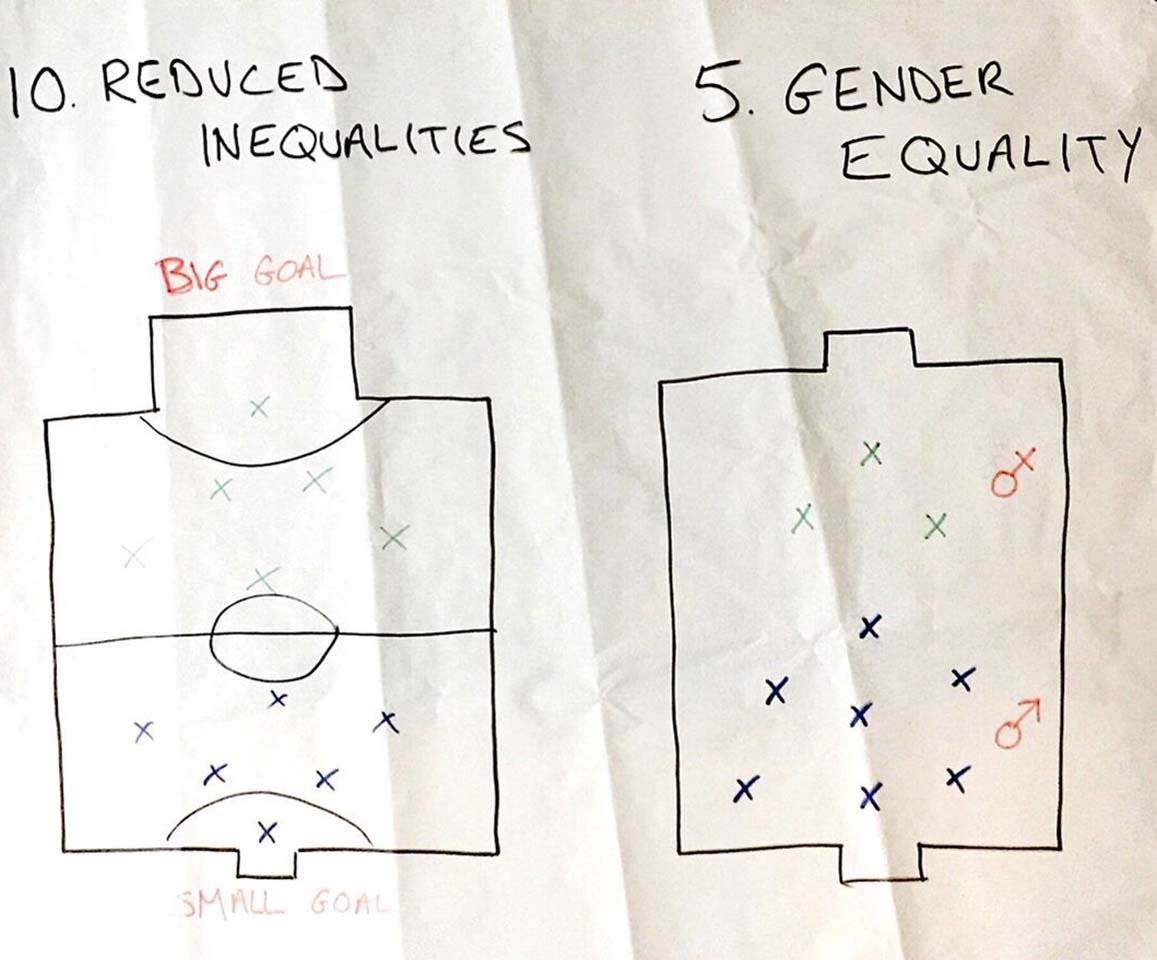
Unequal Match is a thought-provoking game that illustrates the concept of inequality. By creating an uneven playing field, players can experience firsthand the challenges faced by marginalized groups in competitive environments.
How to Play:
Divide into teams: Divide players into two teams, ensuring one team has fewer players than the other.
Set up the field: Use goals of different sizes to create an uneven playing field.
Play the game: Teams compete in a ‘normal’ football match, with the goal of scoring more points/goals.
This game and drill is a powerful tool for teaching players about social justice and the importance of fairness in sports and outside the field. By experiencing inequality firsthand, players can gain a deeper understanding of the challenges faced by marginalized groups and the importance of advocating for equality in all aspects of society.
More Play
-
Movement restrictions: One team can be limited to walking or walking backward, while the other runs.
Obstacle course: Add obstacles to the field to further challenge the smaller team.
Skill-based challenges: Introduce skill-based challenges, such as dribbling or shooting accuracy, to highlight the impact of inequality.
-
Players: This game could be run with numbers of players depending on the field size.
Area: Everything works perfect.
Level: All players
Ideal for age/grade: Everyone can have fun with this.
Estimated time fromstart to end: You can use this game as a warm up or a short fun break during a school day and lesson.
Materials: Balls – Bibs – Goals, different sizes.
Create Game Situations
Encourage creativity:
Invite players to suggest unique game scenarios and modifications.
Goal-based challenges: Introduce different goals for each team, such as scoring a certain number of goals or completing specific challenges.
Integrating Global Goals:
Goal-based rewards: Implement a system where teams can earn bonus points by stating a Global Goal and how they plan to promote it in their community.
Water break discussions: Use water breaks as opportunities for players to discuss and share their ideas for promoting the Global Goals.
Small-sided games: Encourage players to form smaller teams for easier communication and engagement.
Additional Tips:
Variety is key: Offer a variety of game formats and challenges to keep players engaged.
Flexibility: Be adaptable and willing to adjust the game based on player feedback and preferences.
Community involvement: Encourage players to involve their communities in the game and the Global Goals initiative.