

Global Goal 4: Quality Education
by Becca Todd, United Kingdom
Description
How a variety of things are needed for a quality education.
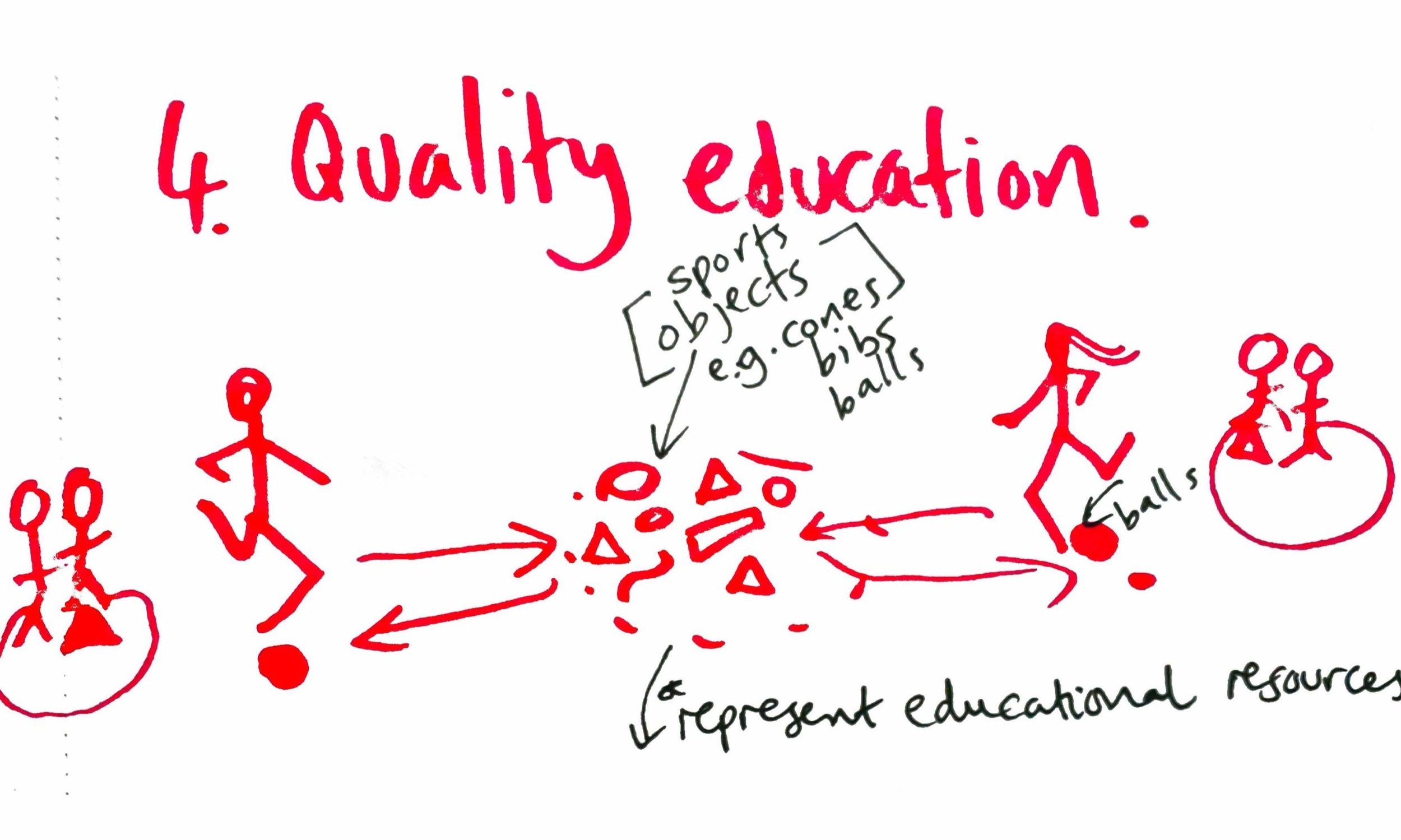
Cones represent education resources such as books, pencils and computers etc.
Can work with either just running into the middle, or dribbling balls simultaneously.
Divide players into two teams.
Place cones etc in the middle of the pitch.
When the coach says go, the teams have to race one by one to the middle.
The one team that gets more educational resources gets a higher education.
More play
-
Players: Any number divided into equal teams for a relay.
Area: Any size that’s a sufficient distance to run races into the middle.
-
Add defenders which represent barriers to education. The defenders have to tag the players to stop them getting items from the middle.
Players have to dribble balls to the middle.
Before players can reach for a cone, they have to jump from one foot to the other and touch the ball x times.
-
Cones, bibs etc. that can represent educational resources.Item description.
-
Dribble the ball as fast as you can with lots of touches on the ball to keep control. The faster you go, the more chances your team will have to grab cones from the middle.
Use both feet for a more balanced dribbling technique- using the outside of the foot is more natural to match your running gait.
Practice the toe taps challenge beforehand so that you can do it really quickly in the game and beat the other teams!
Use a variety of turns and tricks to improve your dribbling skills.
Create Game Situations
Encourage creativity:
Invite players to suggest unique game scenarios and modifications.
Goal-based challenges: Introduce different goals for each team, such as scoring a certain number of goals or completing specific challenges.
Integrating Global Goals:
Goal-based rewards: Implement a system where teams can earn bonus points by stating a Global Goal and how they plan to promote it in their community.
Water break discussions: Use water breaks as opportunities for players to discuss and share their ideas for promoting the Global Goals.
Small-sided games: Encourage players to form smaller teams for easier communication and engagement.
Additional Tips:
Variety is key: Offer a variety of game formats and challenges to keep players engaged.
Flexibility: Be adaptable and willing to adjust the game based on player feedback and preferences.
Community involvement: Encourage players to involve their communities in the game and the Global Goals initiative.