

Global Goal 12: Responsible Consumption & Production
by Steven O’Reilly, Chelsea FC Foundation, Bangkok
Description
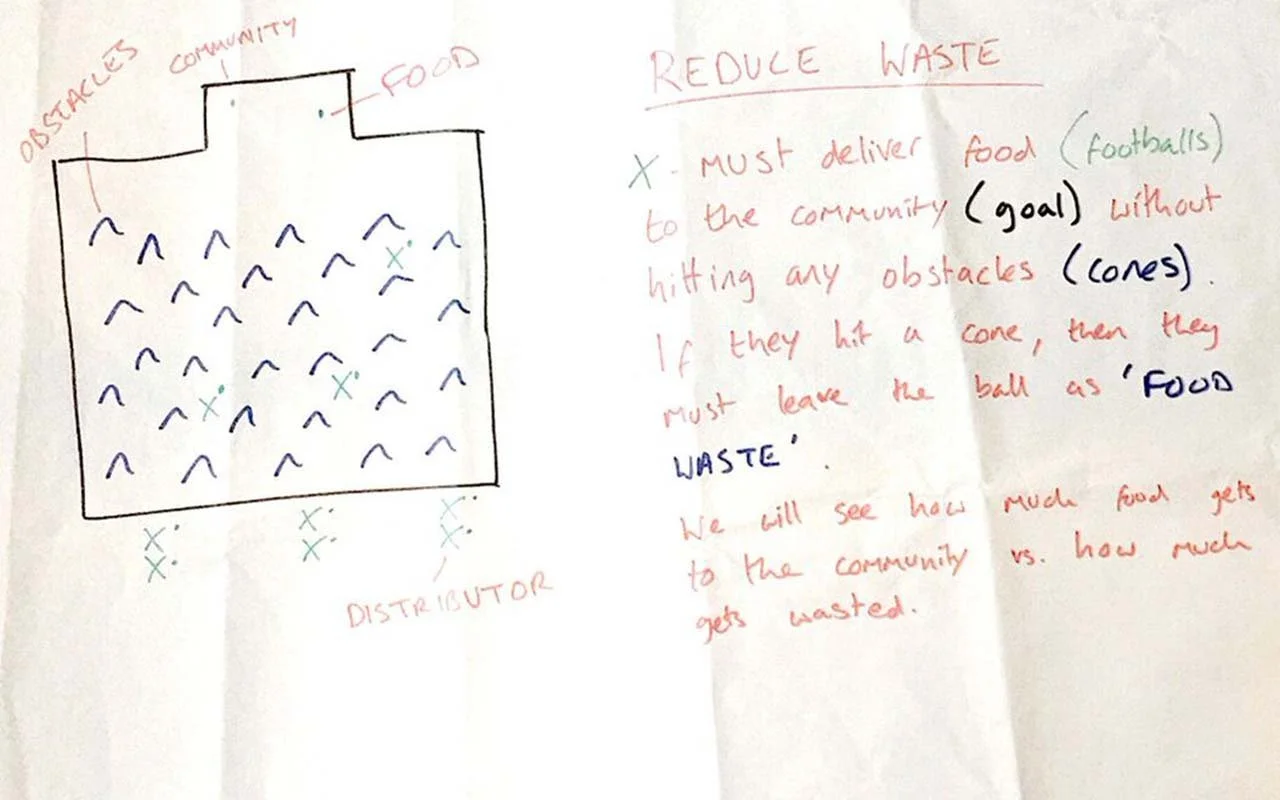
A game that simulates the challenges of food distribution and waste.
Set up the course: Players set up cones or markers as obstacles on the field.
Collect and deliver: Each player starts with a ball (representing food).
Navigate the course: Players dribble their ball around the obstacles, aiming to reach the goal (representing the community).
Avoid waste: If a player hits a cone, they must leave the ball behind, symbolizing wasted food.
Scoring: The team that successfully delivers the most "food" (balls) to the goal wins.
Zero Food Waste is a great way to teach children about the importance of food security, sustainability, and reducing waste. It encourages teamwork, problem-solving, and a sense of responsibility.
More Play
-
Obstacle Course Challenge: Players practice dribbling and maneuvering around obstacles.
Ball Mastery Drills: Players can practice different ball skills, such as juggling and passing.
-
Team Competition: Divide players into teams and have them compete to deliver the most food.
Individual Challenge: Players can compete individually to see who can deliver the most food in a set amount of time.
Time Trial: Set a time limit for players to deliver their food.
-
Add cones.
Create a specific way they have to dribble.
Make it on time, so each time they have to make it 2 seconds faster. This gives a good talk about food waste created if the food does not get out to people fast enough, before it gets too old.
Replace the cones with players. Now the obstacles are moving and need to be tackled
-
Players: This game could be run with numbers of players depending on the field size and number of cones.
Area: Everything works perfect.
Material: Balls – Bibs – Cones.
Level: All players
Ideal for age/grade: All ages.
Create Game Situations
Encourage creativity:
Invite players to suggest unique game scenarios and modifications.
Goal-based challenges: Introduce different goals for each team, such as scoring a certain number of goals or completing specific challenges.
Integrating Global Goals:
Goal-based rewards: Implement a system where teams can earn bonus points by stating a Global Goal and how they plan to promote it in their community.
Water break discussions: Use water breaks as opportunities for players to discuss and share their ideas for promoting the Global Goals.
Small-sided games: Encourage players to form smaller teams for easier communication and engagement.
Additional Tips:
Variety is key: Offer a variety of game formats and challenges to keep players engaged.
Flexibility: Be adaptable and willing to adjust the game based on player feedback and preferences.
Community involvement: Encourage players to involve their communities in the game and the Global Goals initiative.