

Global Goal 8: Decent Work & Economic Growth
by Camilla Olsen, Denmark
Description
Bib Race
Students are divided into groups (companies) and the teams run against each other.
First player wears a bib and run down to the cone as fast as possible – and back again.
When player is back to the team player takes the next player’s hands.
Now the group has to collaborate and get the bib transported to the next player without the two who hold hands loses the grip.
This can be done with and without ball.
Ball Race
Collaborate two and two to get the ball from a-b without using hands.
The ball can’t touch the ground and the players is constantly in contact with the ball.
On the road from a-b, players must go slalom and pass other obstacles.
More play
-
Players: Minimum 5 players.
Area: Flexible depending on how many players you are training.
-
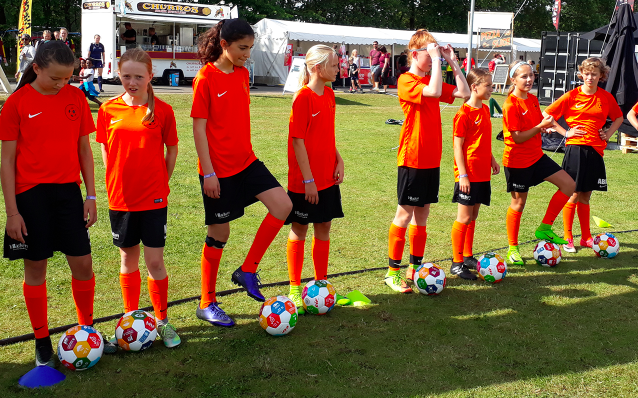
Balls and bibs.
Create Game Situations
Encourage creativity:
Invite players to suggest unique game scenarios and modifications.
Goal-based challenges: Introduce different goals for each team, such as scoring a certain number of goals or completing specific challenges.
Integrating Global Goals:
Goal-based rewards: Implement a system where teams can earn bonus points by stating a Global Goal and how they plan to promote it in their community.
Water break discussions: Use water breaks as opportunities for players to discuss and share their ideas for promoting the Global Goals.
Small-sided games: Encourage players to form smaller teams for easier communication and engagement.
Additional Tips:
Variety is key: Offer a variety of game formats and challenges to keep players engaged.
Flexibility: Be adaptable and willing to adjust the game based on player feedback and preferences.
Community involvement: Encourage players to involve their communities in the game and the Global Goals initiative.