

Global Goal 2: Zero Hunger
by Steven O’Reilly, Chelsea FC Foundation, Bangkok
Description
Imagine playing soccer while feeling hungry. It's a challenge, right? That's the idea behind this drill.
Use this game as a warm up or a short break during a school day and lesson.
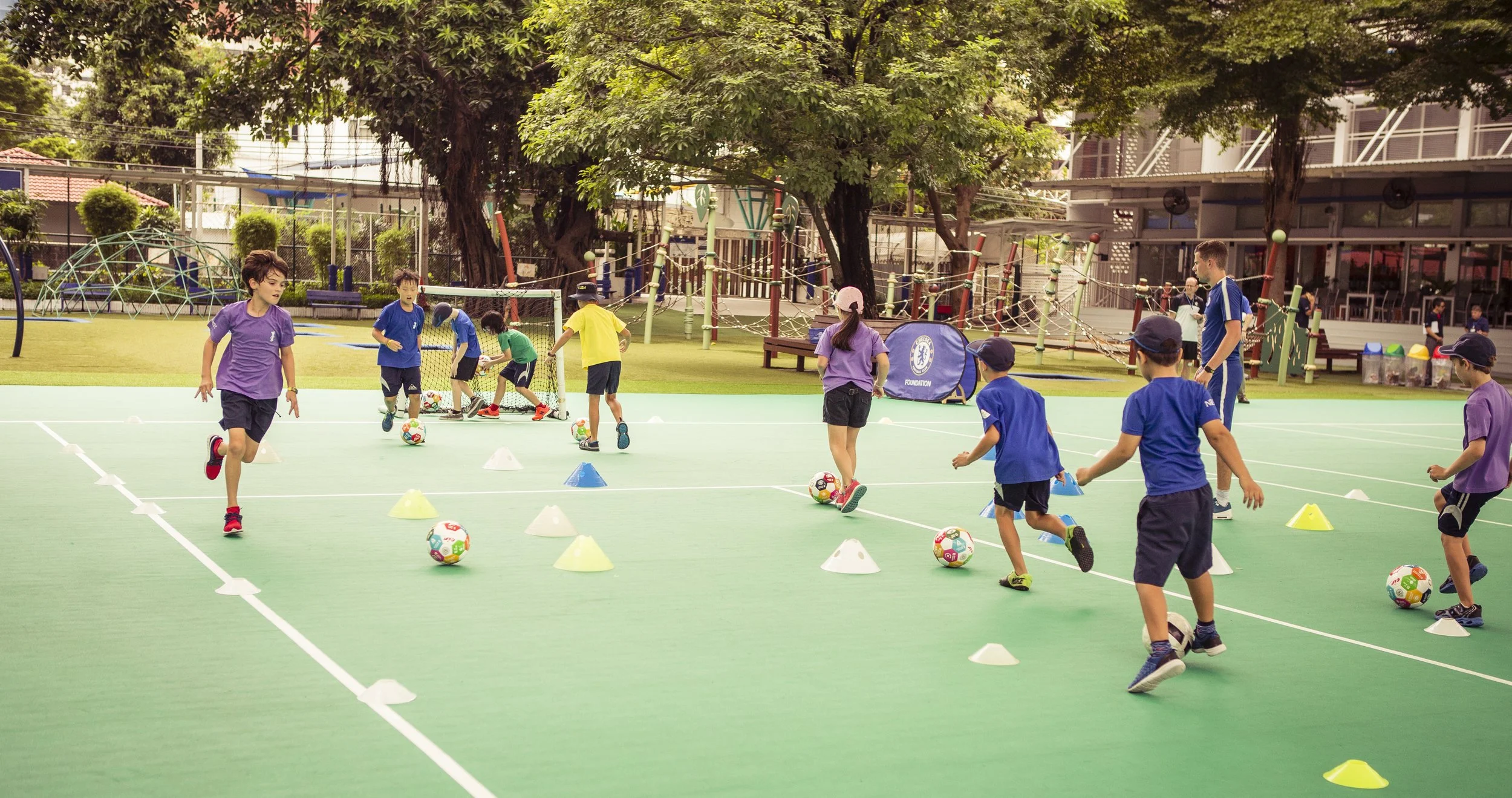
Dribble and Score: Players dribble across the field and attempt to score on a goalkeeper.
Beat Hunger: Scoring a goal symbolizes overcoming hunger and gaining strength.
Switch Roles: Players who don't score switch places with the goalkeeper, emphasizing the importance of teamwork and perseverance.
More play
-
Each players has a ball and will kick their penalty kick from behind the dotted line.
The players has to score as many goals as possible
After a player scores a goal he/she dribbles the ball around the goals and as fast as possible to the other end without loosing the ball.
If a player miss the goal he/she just he don’t get a point.
-
Change direction and the players have to kick with the other foot.
This can also be done dribbling around (school) buildings if you don’t have access to goals. Have the players touch a certain spot, a tree etc.
-
Goal and balls.
-
Use smaller goals.
Extent the distance from dotted lines to goals.
Players have to work together two and two.
Add cones and obstacles.
-
Same game, but divide the group into 2-3 or 4 teams.
Now count how many goals they score in 2 or more minutes.
This can be repeated several times.
Create Game Situations
Encourage creativity:
Invite players to suggest unique game scenarios and modifications.
Goal-based challenges: Introduce different goals for each team, such as scoring a certain number of goals or completing specific challenges.
Integrating Global Goals:
Goal-based rewards: Implement a system where teams can earn bonus points by stating a Global Goal and how they plan to promote it in their community.
Water break discussions: Use water breaks as opportunities for players to discuss and share their ideas for promoting the Global Goals.
Small-sided games: Encourage players to form smaller teams for easier communication and engagement.
Additional Tips:
Variety is key: Offer a variety of game formats and challenges to keep players engaged.
Flexibility: Be adaptable and willing to adjust the game based on player feedback and preferences.
Community involvement: Encourage players to involve their communities in the game and the Global Goals initiative.