

Global Goal 6: Clean Water & Sanitation
by Becca Todd, United Kingdom
Description
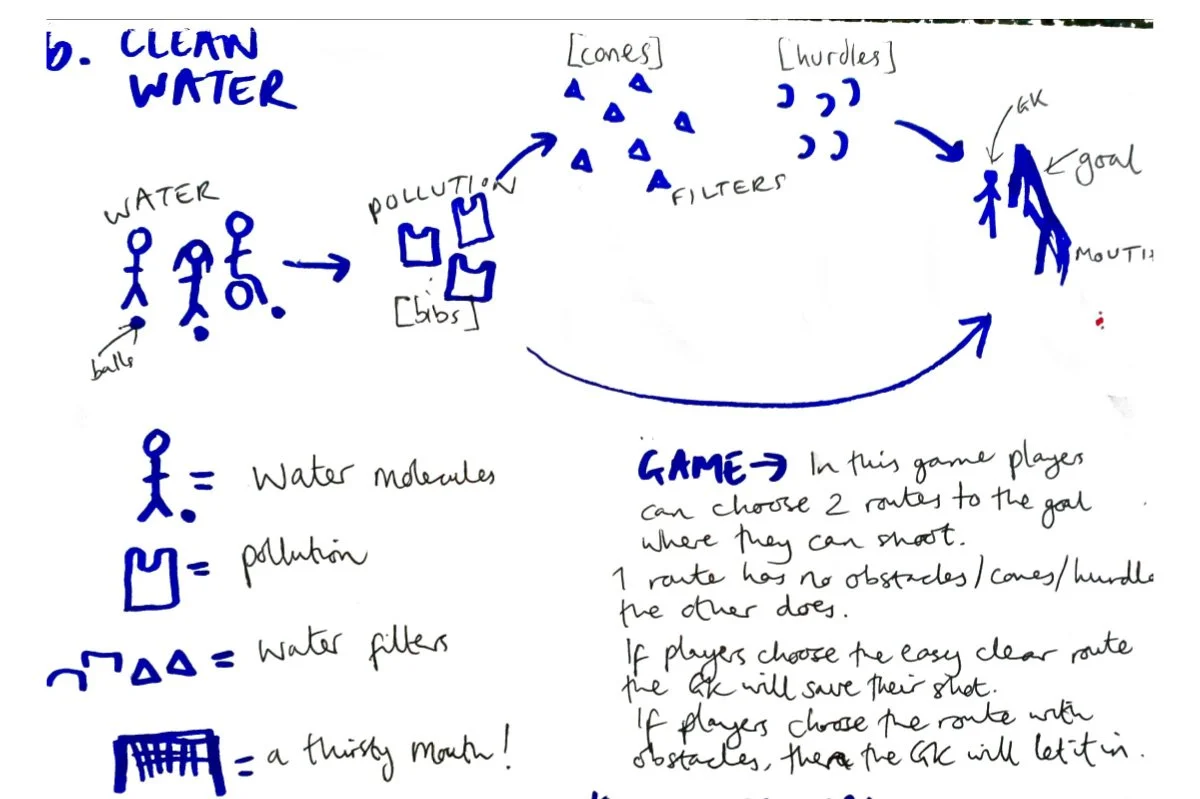
Players represent clean water. When players put on a bib, they become polluted. Navigate the obstacles (filters) to reach the goal (a thirsty mouth) and purify the water.Make two routes – one clear and one filled with obstacles – down to the goal
All players take turns and first base is the pile of bibs and pollution.
Now the players have to choose between the two routes.
If players choose the obstacle route they can score.
If players choose the clear route they can’t score. Nobody likes to drink polluted water.
More play
-
Use defenders instead of cones as the “filter”.
-
Make the cone obstacles more difficult to pass through.
-
Players: This game could be run with numbers of players doing the drill, as long as there are enough goals so that they don’t get bored waiting in a queue.
Area: Flexible depending on how large the “filter” cone area are going to be.
-
A ball for each player.
Coloured bibs for the “Pollution”.
Cones, obstacles, goal.
Create Game Situations
Encourage creativity:
Invite players to suggest unique game scenarios and modifications.
Goal-based challenges: Introduce different goals for each team, such as scoring a certain number of goals or completing specific challenges.
Integrating Global Goals:
Goal-based rewards: Implement a system where teams can earn bonus points by stating a Global Goal and how they plan to promote it in their community.
Water break discussions: Use water breaks as opportunities for players to discuss and share their ideas for promoting the Global Goals.
Small-sided games: Encourage players to form smaller teams for easier communication and engagement.
Additional Tips:
Variety is key: Offer a variety of game formats and challenges to keep players engaged.
Flexibility: Be adaptable and willing to adjust the game based on player feedback and preferences.
Community involvement: Encourage players to involve their communities in the game and the Global Goals initiative.