

Global Goal 14: Life Below Water
by Becca Todd, United Kingdom
Description
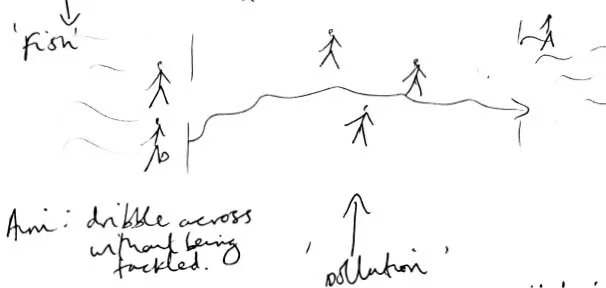
Fish Dribble a dynamic game that simulates the impact of pollution on marine ecosystems. Players can gain a deeper understanding of environmental issues and the importance of protecting our oceans.
Divide into teams: Divide players into two teams: Fish and Pollution.
Set the stage: Create a playing field with defined boundaries.
The Fish: Fish players must navigate the field, dribbling a ball to represent their movement in the water.
The Pollution: Pollution players must tag the fish players to eliminate them from the game.
Increasing Pollution: As the game progresses, more players can be added to the Pollution team to simulate the worsening environmental conditions.
More Play
-
Obstacle Course: Add obstacles to the field to represent underwater debris or other environmental challenges.
Limited Time: Set a time limit for the game, adding a sense of urgency.
Skill Challenges: Introduce challenges like dribbling with both feet or performing specific dribbling tricks.
-
Role of the Decoy: One player on the fish team can act as a decoy, drawing the attention of the pollution players away from the other fish.
Strategic Play: The decoy can use various tactics, such as feinting or changing direction, to confuse the pollution team and create opportunities for the other fish to escape.
This variation adds a strategic element to the game, encouraging players to think critically and work together to outsmart the pollution team.
-
Players: For a balanced and engaging game, aim for a minimum of 6-8 players. This number allows for a good mix of fish and pollution players, creating a dynamic and challenging game.
Bibs: To differentiate between fish and pollution players.
Balls: One ball for each fish player.
Cones or markers: To define the playing area and create obstacles (optional).
You can also use a whistle to signal the start and end of the game.
Create Game Situations
Encourage creativity:
Invite players to suggest unique game scenarios and modifications.
Goal-based challenges: Introduce different goals for each team, such as scoring a certain number of goals or completing specific challenges.
Integrating Global Goals:
Goal-based rewards: Implement a system where teams can earn bonus points by stating a Global Goal and how they plan to promote it in their community.
Water break discussions: Use water breaks as opportunities for players to discuss and share their ideas for promoting the Global Goals.
Small-sided games: Encourage players to form smaller teams for easier communication and engagement.
Additional Tips:
Variety is key: Offer a variety of game formats and challenges to keep players engaged.
Flexibility: Be adaptable and willing to adjust the game based on player feedback and preferences.
Community involvement: Encourage players to involve their communities in the game and the Global Goals initiative.