

Global Goal 5: Gender Equality
by Becca Todd, United Kingdom
Description
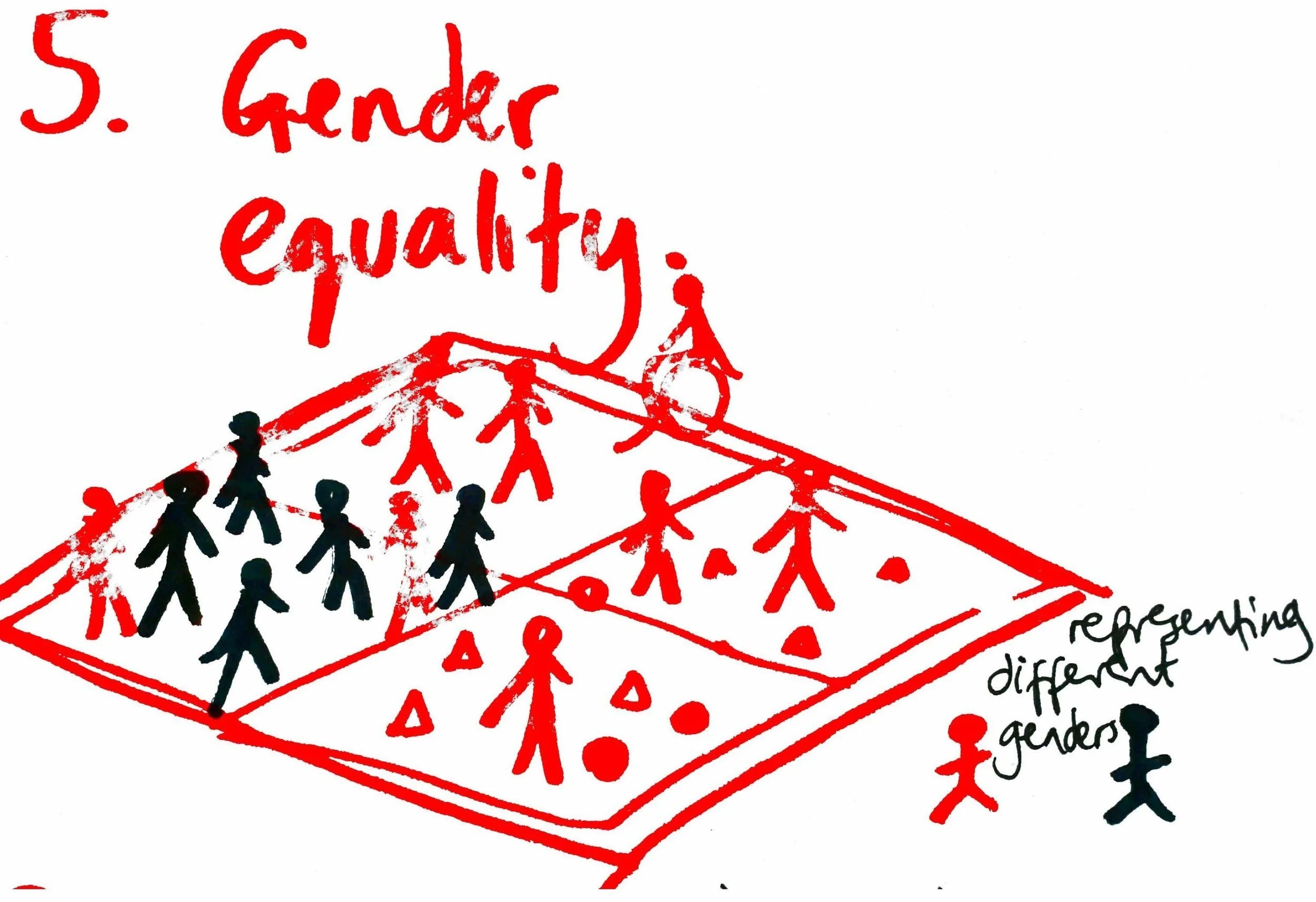
Divide the players into two teams and mark off four (equal) quarters on the pitch.
The goal is to keep possession of the ball. When the coach signals, send one player from your team to try and steal the ball from the opposing team.
Remember, the team with more space on the field will have a greater advantage.
Tips for the defenders
Pressure the player on the ball by running towards them and making them make mistakes.
As the ball moves, keep moving from player to player putting pressure on them all.
Stay low to keep your balance, and defend sideways on so that you can react and change direction quickly.
Communicate with the other defenders to decide who will defend against which other players- be organized.
Work hard until you get the ball back!
Tips for the teams keeping possession
Each team is representing different genders.
One team is allowed to keep possession in 3 or the 4 quarters (a lot more space).
The other team can only play in one of the quarters.
More play
-
Maximise the space that you have by spreading out right to the edge of the area.
Keep moving and changing position to confuse the defenders and give yourselves more space to play.
Pass the ball quickly but accurately so that it’s harder for the defenders.
Communicate and support each other to keep possession.
-
Players: Minimum 8 players.
Area: Depends on number of players- but sufficient to keep possession.
-
Place different games/activities in each quarters.
-
Increase the amount of defenders trying to win the ball back from the other team,
-
Balls, cones, bibs.
Create Game Situations
Encourage creativity:
Invite players to suggest unique game scenarios and modifications.
Goal-based challenges: Introduce different goals for each team, such as scoring a certain number of goals or completing specific challenges.
Integrating Global Goals:
Goal-based rewards: Implement a system where teams can earn bonus points by stating a Global Goal and how they plan to promote it in their community.
Water break discussions: Use water breaks as opportunities for players to discuss and share their ideas for promoting the Global Goals.
Small-sided games: Encourage players to form smaller teams for easier communication and engagement.
Additional Tips:
Variety is key: Offer a variety of game formats and challenges to keep players engaged.
Flexibility: Be adaptable and willing to adjust the game based on player feedback and preferences.
Community involvement: Encourage players to involve their communities in the game and the Global Goals initiative.